
Clients are welcome to visit our new home – We also provide FREE DELIVERIES TO STEVENAGE, LETCHWORTH & HITCHIN
Opaque Window Film is used when a commercial space needs complete visual screening through an existing pane of glass. Unlike translucent frosting, which obscures detail while allowing diffuse light to pass, an opaque finish is designed to prevent a view through the treated area. It can be useful for storage rooms, back-office zones, sensitive workspaces, unused display sections and glazing that exposes equipment or confidential activity. Smiths 1972 helps London organisations compare opaque, frosted and custom-cut films so the selected treatment delivers the required privacy without unnecessarily reducing light or making the wider interior feel enclosed.
The correct product depends on the glass, viewing direction, room use and desired appearance. We consider both sides of the pane, neighbouring light sources, furniture, branding and safety requirements before recommending full coverage, a partial panel or a more light-transmitting alternative. This prevents a solid finish being used where a lighter and more flexible privacy treatment would work better.
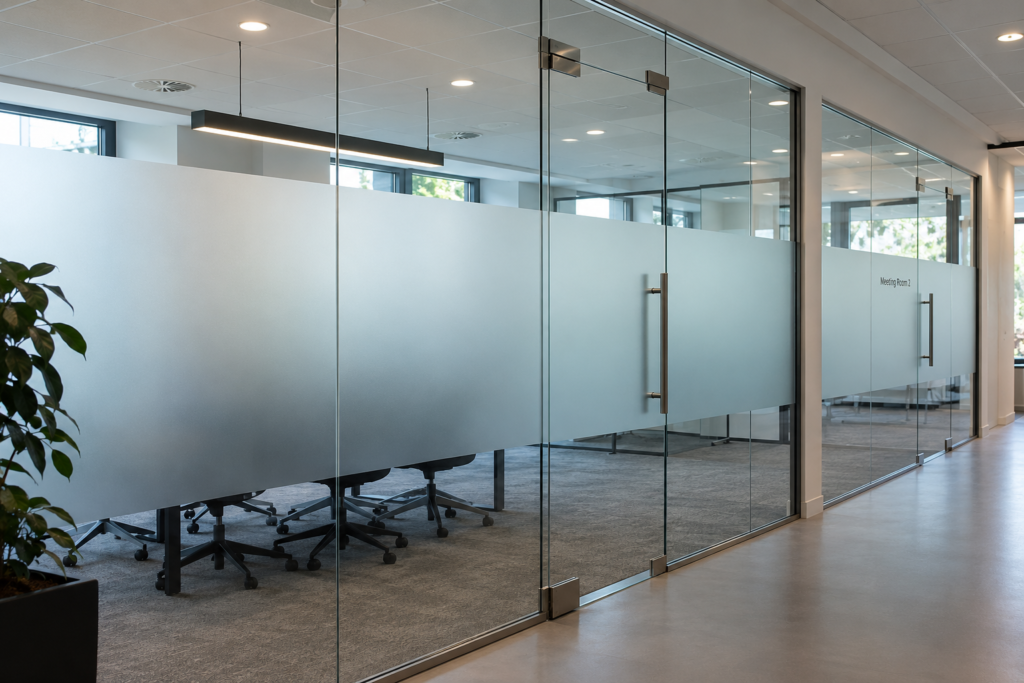
Opaque Window Film creates a solid visual barrier across the area where it is applied. It is intended for situations where silhouettes and general activity should not remain visible through the glass. Depending on the selected material, the finish may appear white, black, coloured or printed. The appearance from each side must be checked because some products have different face and adhesive colours.
The two terms are often used interchangeably in searches, but they describe different results. Frosted film diffuses the image and normally retains a high level of transmitted light. Opaque material blocks the view more completely and may significantly reduce light through the covered section. Our commercial frosted window film service is often preferable for meeting rooms and glazed offices where daylight remains important, while an opaque specification suits areas needing stronger concealment.
Covering an entire pane provides the highest degree of screening, but it is not always necessary. A solid lower panel may hide cabinets, equipment or activity at desk height while leaving the upper glass clear. A carefully measured central section can protect a particular sightline. Partial application also reduces the effect on daylight and can make the treatment feel more integrated with the interior.
Commercial premises often include spaces that need to remain functional without being on display. Stock rooms, print areas, equipment cupboards, server spaces and preparation zones may sit behind glazing inherited from a previous layout. Film can conceal these areas without removing sound panes or building a new wall. The surface should still be assessed for compatibility and internal heat conditions before the product is confirmed.
Some teams handle information or processes that should not be observable from corridors or public areas. Opaque Window Film can provide a more complete barrier for selected panes around human resources rooms, secure operational spaces or specialist facilities. The design should account for doors, side panels and gaps between sections so that privacy is not undermined by an untreated viewing angle.
A completely screened pane can change the brightness of adjoining rooms. This is particularly important in deep-plan London offices where internal areas borrow light from perimeter windows. If the objective is to hide detail rather than all light and movement, a translucent frost may provide a better balance. Sample comparisons and a review of the existing layout help avoid specifying a heavier treatment than the space requires.
Solid film can become part of the visual scheme. A neutral white finish may suit a clinical or minimalist interior, while coloured or printed graphics can support branding. Large unbroken panels need accurate fitting because edges, joins and surface contamination may be more noticeable than on a patterned design. Artwork should be prepared to the measured glass sizes and considered from both sides.
Where clear glass remains above or beside the opaque section, visible manifestation may still be required to make doors and partitions apparent. Bands, symbols, dots or lettering can be coordinated with the solid panel. Room labels and directional information may also be incorporated, helping the glazing perform a safety and wayfinding role as well as providing privacy.
Professional installation begins with checking the glass, confirming measurements and preparing the surface carefully. Access around desks, displays or equipment should be organised before the fitting date. In occupied buildings, work can be phased by room or floor. London loading, parking, building security and working-hour restrictions should also be agreed in advance to keep the visit efficient.
Glazed rooms sometimes become storage, print or operational spaces as workplace layouts change. A solid treatment conceals visual clutter and protects working areas from public view. It can also help reception and customer zones maintain a cleaner, more controlled appearance.
Certain healthcare, treatment or assessment rooms need more screening than standard frost provides. Coverage can be applied to the relevant panes while other glazing uses translucent film to retain light. A calm colour and uncluttered design generally suit these sensitive environments.
Shops, showrooms and hospitality premises may need to hide stock, preparation activity or an unused section of a window. Film provides a clean surface that can be left plain or printed with brand graphics, promotional content or opening information. The interior and exterior appearance should both be reviewed.
Tenants sometimes need to adapt glazing without replacing it permanently. Applied film can support a changed layout and can normally be removed later from suitable glass. Lease conditions, pane type and expected duration should be considered so that the installation meets both operational and property requirements.
We advise on Opaque Window Film and related privacy treatments for businesses in the City, Westminster, Canary Wharf, Shoreditch, Holborn, Camden, Hammersmith, Croydon and surrounding London districts. Projects may involve one concealed room, a retail frontage or coordinated treatments across several office floors. The recommendation is based on the required privacy, available light and appearance of the building.
The value of film comes from matching its opacity to the task. A correctly specified solution can conceal sensitive areas, update existing glass and support a consistent commercial interior without unnecessary structural work.
We begin by clarifying whether the priority is total concealment, obscured detail or a combination of privacy and daylight. Photographs, plans and approximate dimensions help with initial advice, followed by a survey where the glass or sightlines need closer assessment. Samples may be compared before artwork and production. This process helps distinguish situations that need a solid film from those better served by translucent frosting.
Opaque Window Film is one option within a wider range of privacy treatments. Smiths 1972 can help you compare solid panels, satin frost, privacy bands and custom graphics for your London property. Explore our window frosting and privacy film options or contact the team to discuss a practical specification, survey and quotation.
The 3M Glass Finishes range shows that privacy film is not limited to one standard frost. FASARA matte and patterned finishes, Crystal Dusted and Frosted films, and higher-opacity designs offer different balances of light, screening and appearance. This is important when Opaque Window Film must conceal storage, equipment or private activity rather than simply soften a view.
3M lists typical transmission references ranging from 89% for Frost Matte and 60% for Milky White to 6% for Opaque White and 1% for Opaque Black. These are reference values and are not warranted project outcomes. Samples should be reviewed on the actual glass because lighting, viewing distance and conditions on each side influence perceived privacy. Product availability, compatibility and the latest technical data must also be checked before specification. View the 3M Glass Finishes sample book.
Some solid films transmit a limited amount of light, while others block it more completely. The precise result depends on the product, colour and construction. If retaining daylight is important, translucent frosted film may be the more suitable choice.
No. Frosted film obscures detail but generally allows diffuse light through and may still reveal some movement. An opaque finish is selected when a stronger visual barrier is required. Samples can make the difference much clearer.
Yes. A lower panel, central section or shaped area may provide the required screening without covering the complete pane. Accurate sightline measurements help determine the correct position and dimensions.
Yes. Solid colours can be combined with cut lettering, printed graphics or separate brand elements. The design should be checked from both sides of the glass, especially on entrance doors and customer-facing windows.
It can normally be removed from compatible glass, although removal time and any adhesive residue depend on the product, installation period and condition of the pane. This makes film useful for many leased commercial properties.
Send photographs, approximate measurements, the property address and an explanation of what must be hidden. You can also review our commercial frosted film solutions. We can then advise whether opaque or translucent film is more appropriate and arrange a survey where required.
For Opaque Window Film in London, Smiths 1972 also supports organisations in nearby towns including Watford, Borehamwood, St Albans and Enfield. Our team works from Stevenage, Hertfordshire.
Want to discuss your project?