
Clients are welcome to visit our new home – We also provide FREE DELIVERIES TO STEVENAGE, LETCHWORTH & HITCHIN
Prefer to call?
Department-store fixture refurbishment. Survey, finish selection and installation planning for commercial premises.
Selected interior elements can gain a new finish while the usable substrate beneath them is retained. For Norwich, this guide focuses on department-store fixture refurbishment, where the brief may involve cash desks, brand bays and display plinths. A credible proposal separates wrappable surfaces from swollen boards, loose veneers, crumbling paint and other unsuitable conditions.
The chosen film must work with the existing palette and wear pattern, rather than functioning as an isolated visual gesture. Luxury wood, satin metal and colour-matched films can be sampled against adjacent floors, walls and furniture before approval. Access planning matters too. Trading hours, concession approvals and frequent layout changes should be recorded before quantities and programme dates are fixed.
3M DI-NOC, Cover Styl and Metamark MIA offer different architectural-film palettes for refurbishment work. Selection needs evidence from the survey, manufacturer information and an approved on-site sample, including its colour, texture, orientation and intended cleaning method.
Our commercial architectural wrapping service covers surface assessment, material selection and installation. If your specification names 3M, see our DI-NOC installation service.
For a project in Norwich, send the site postcode and scope so we can confirm survey and installation availability.
Request a quote. Send your project postcode, surface photographs, approximate dimensions or quantities, preferred finish and installation date. We can then confirm suitability, access requirements and the next step.

List each item included in the project, noting dimensions, construction, existing coatings, repairs, corners, handles and removable fittings. For this Norwich brief, pay particular attention to cash desks, brand bays and display plinths. Survey images linked to room and item numbers reveal variations before templates or material quantities are finalised.
Review luxury wood, satin metal and colour-matched films as physical samples on or beside the intended substrate. Check colour, grain direction, sheen and junctions from normal viewing positions. Create a fixture register with dimensions, ownership and approved finish so each concession understands the agreed boundary. Sign-off needs the manufacturer reference, colourway, texture and physical sample that formed the decision.
Build the sequence around trading hours, concession approvals and frequent layout changes. Confirm delivery routes, storage, inductions, isolation of work zones and who can release each area. The method statement should keep fire exits, critical devices and necessary pedestrian routes continuously available.
Provide an installation schedule showing where every film was used, how vulnerable edges were finished and what cleaning applies. This supports repairs and later phases. The practical result is extending the life of adaptable retail furniture while maintaining visual consistency. Where condition permits, continued use of existing fabric can cut unnecessary removal and disposal operations.
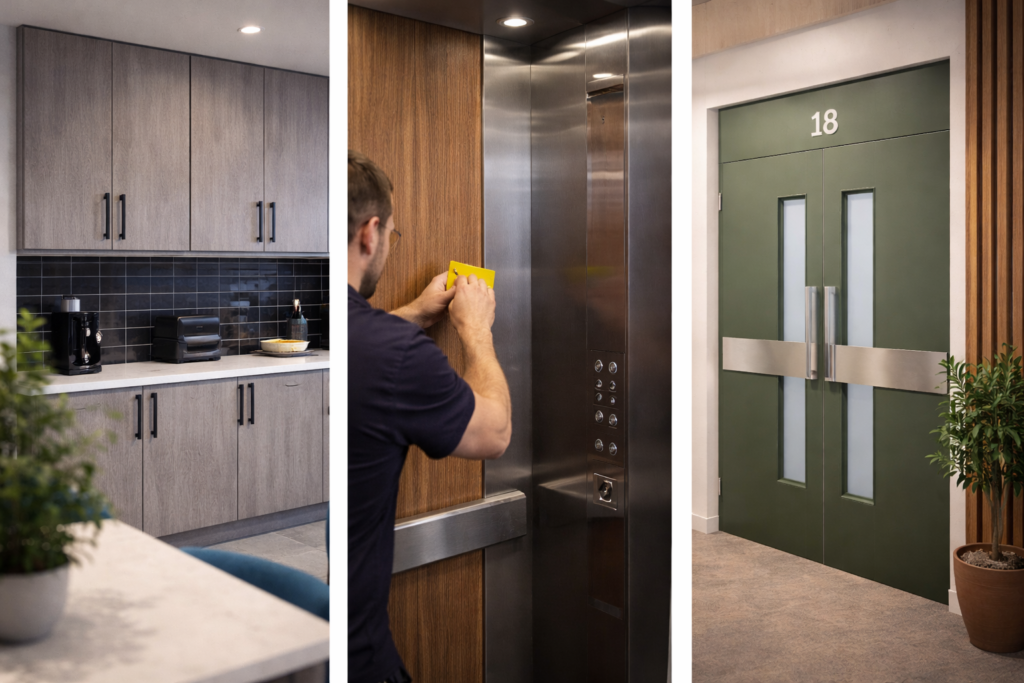
Before ordering architectural wrapping for Norwich, confirm the substrate survey, measured quantities, approved material code, grain direction, edge treatment and installation sequence. Check that the project team agrees what is excluded as well as what will be wrapped. Create a fixture register with dimensions, ownership and approved finish so each concession understands the agreed boundary. Archive the accepted panel image alongside dimensions, annotations and the client decision trail. Coordinate vehicle arrival, internal movement, covering of nearby assets, waste collection and maintenance information. This process gives the project measurable boundaries, technical references and a usable handover trail.
Department-store wrapping needs a fixture ownership map because concessions, landlord areas and central retail teams may control neighbouring surfaces. In Norwich, identify cash desks, brand bays, security pedestals, lighting tracks and removable campaign panels separately. Photograph cable access and alarm hardware before preparation. Check whether plinths are moved by pallet truck or by hand, since underside damage and wheel clearance affect the detail. A sample installed in a quiet department should be tested through opening, cleaning and merchandising changes before the main trading-floor sequence begins. Use a neutral finish where the furniture must support many brands, and reserve stronger colours for elements genuinely controlled by the store. Agree an overnight completion checklist covering till reconnection, stock protection, dust removal, edge inspection and reinstatement of customer routes. Keep promotional pricing on replaceable graphics so the architectural finish can remain in service after the campaign changes.
Merchandising trials should follow the complete life of a fixture, from delivery of stock to end-of-day recovery. Watch how hangers, shelf talkers, mirrors, portable card readers and loss-prevention devices are positioned around the proposed wrapped faces. Confirm whether housekeeping uses vacuum equipment, spray products or polishing cloths near low-level edges. In the Norwich schedule, distinguish permanently fixed counters from wheeled gondolas and concession-owned units; each may need a different approval and durability expectation. Photograph plinth feet, recessed kick plates and junctions hidden by stock, because these details influence preparation time once the department is cleared. Set a maximum amount of furniture out of service during any trading night, name the manager responsible for reopening inspection and record faults before installers begin. The final handback should test drawers, locks, till shutters and removable access panels, with temporary promotional graphics restored only after the architectural finish has been accepted.
The selected film, measured area, condition of the substrate, preparation, edges and access affect the price. Compare the full installed scope with replacement, including repairs and making good, rather than comparing material prices alone.
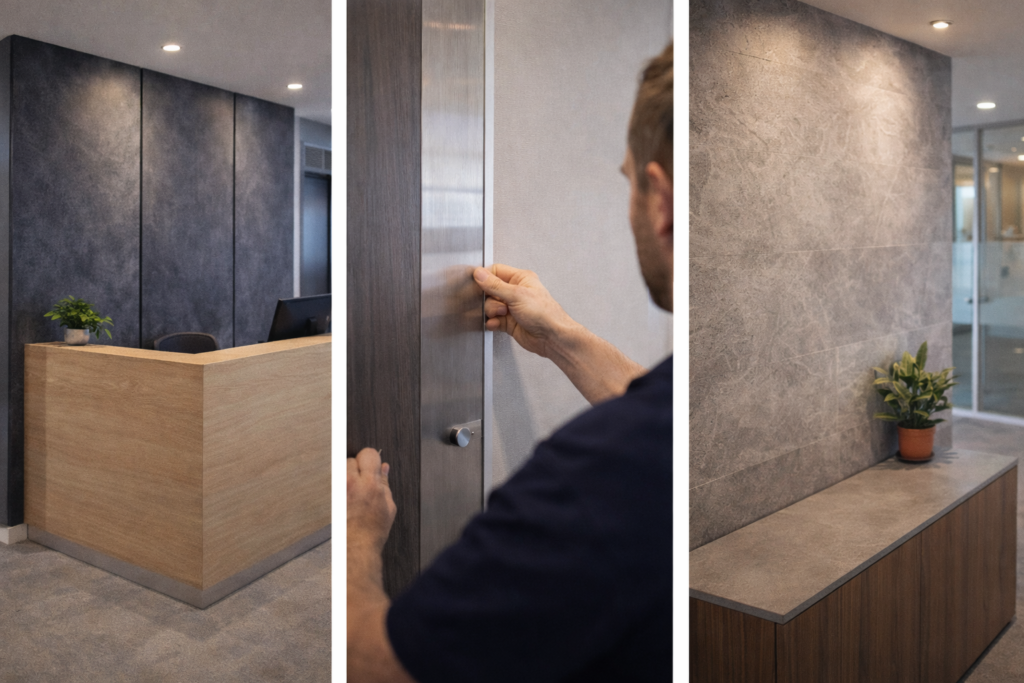
Start with cash desks, brand bays and display plinths. Each substrate must be stable, smooth enough for the selected system and assessed before a quotation is finalised.
Compare physical samples of luxury wood, satin metal and colour-matched films under the actual lighting, beside neighbouring materials, and on a representative edge or corner where practical.
Often yes. The programme should account for trading hours, concession approvals and frequent layout changes, together with safe access, preparation time and client sign-off.
No. The substrate and coating must be sound and compatible with the selected film. Loose paint, movement, moisture and damaged edges may require repair or make wrapping unsuitable.
Send the site postcode, photographs, approximate dimensions or quantities, the intended finish and your preferred dates. Include access restrictions and any drawings or product references already specified.
For Architectural Wrapping in Norwich, Smiths 1972 also supports organisations in nearby towns including Wymondham, Dereham, Aylsham and Thetford. Our team works from Stevenage, Hertfordshire.
Want to discuss your project?