
Clients are welcome to visit our new home – We also provide FREE DELIVERIES TO STEVENAGE, LETCHWORTH & HITCHIN
Prefer to call?
Visitor-attraction retail counter renewal. Survey, finish selection and installation planning for commercial premises.
Rather than discarding functional interior components, a surveyed wrapping scheme can give them a carefully controlled new surface. For Canterbury, this guide focuses on visitor-attraction retail counter renewal, where the brief may involve admission desks, shop counters and brochure units. Suitability depends on what lies beneath: instability, damp, friable paint or broken corners must be resolved outside the wrapping allowance.
Texture and sheen should be judged within the room, where daylight, lamps and adjacent finishes alter their appearance. Classic timber, parchment-toned and dark metal effects can be sampled against adjacent floors, walls and furniture before approval. Access planning matters too. School groups, peak visitor times and protected collections should be recorded before quantities and programme dates are fixed.
Depending on the survey and design brief, the material shortlist may draw from 3M DI-NOC, Cover Styl and Metamark MIA. Compare physical texture, sheen, technical guidance, cleaning needs and edge performance before the final architectural film is ordered.
Our commercial architectural wrapping service covers surface assessment, material selection and installation. If your specification names 3M, see our DI-NOC installation service.
For a project in Canterbury, send the site postcode and scope so we can confirm survey and installation availability.
Request a quote. Send your project postcode, surface photographs, approximate dimensions or quantities, preferred finish and installation date. We can then confirm suitability, access requirements and the next step.

List each item included in the project, noting dimensions, construction, existing coatings, repairs, corners, handles and removable fittings. For this Canterbury brief, pay particular attention to admission desks, shop counters and brochure units. Tagging every photographed item reduces confusion between fixtures that look alike but require different preparation.
Review classic timber, parchment-toned and dark metal effects as physical samples on or beside the intended substrate. Check colour, grain direction, sheen and junctions from normal viewing positions. Separate modern commercial fixtures from collection-sensitive areas and obtain the venue approval needed for access. Attach the selected swatch and mock-up photographs to a dated approval note with the full finish reference.
Build the sequence around school groups, peak visitor times and protected collections. Confirm delivery routes, storage, inductions, isolation of work zones and who can release each area. Temporary closures have to respect emergency planning, essential services and clearly signed alternative movement.
A useful handover identifies surfaces completed, products applied, edge construction, cleaning rules and unresolved exclusions. This supports repairs and later phases. The practical result is renewing practical visitor furniture without intruding on protected displays. A retention-led scheme can reduce the volume of material removed from site when compared with a complete refit.
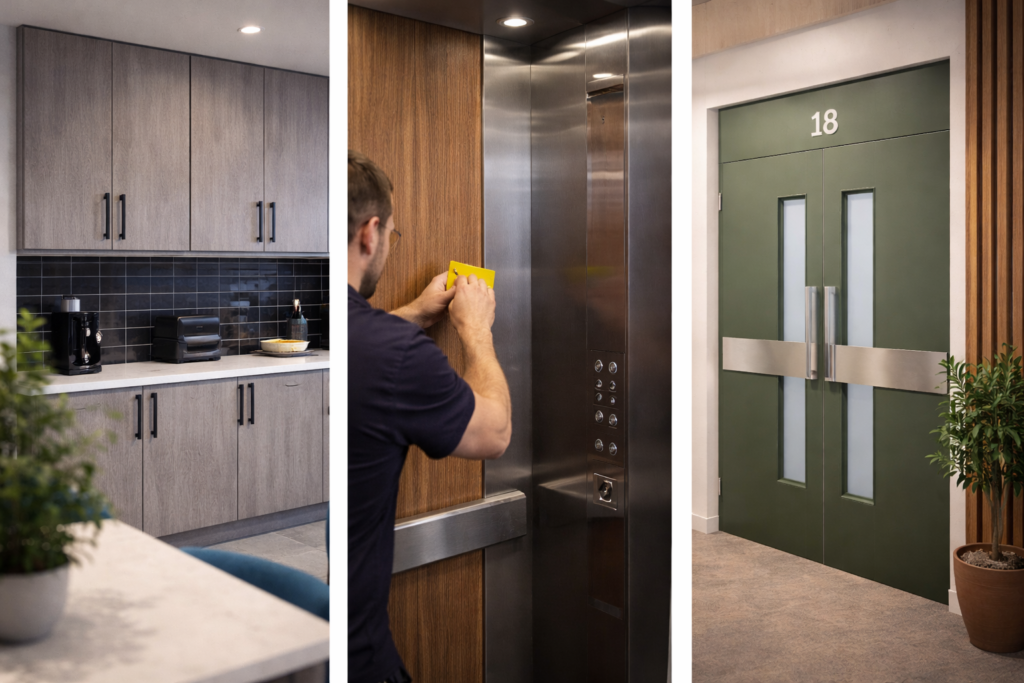
Before ordering architectural wrapping for Canterbury, confirm the substrate survey, measured quantities, approved material code, grain direction, edge treatment and installation sequence. Check that the project team agrees what is excluded as well as what will be wrapped. Separate modern commercial fixtures from collection-sensitive areas and obtain the venue approval needed for access. Capture the signed sample under site lighting and file it beside the measured schedule. The site lead should confirm arrival arrangements, secure storage, work-area protection, waste routes and maintenance briefing. These records make the page a practical planning resource rather than a thin statement of geographic availability.
The selected film, measured area, condition of the substrate, preparation, edges and access affect the price. Compare the full installed scope with replacement, including repairs and making good, rather than comparing material prices alone.
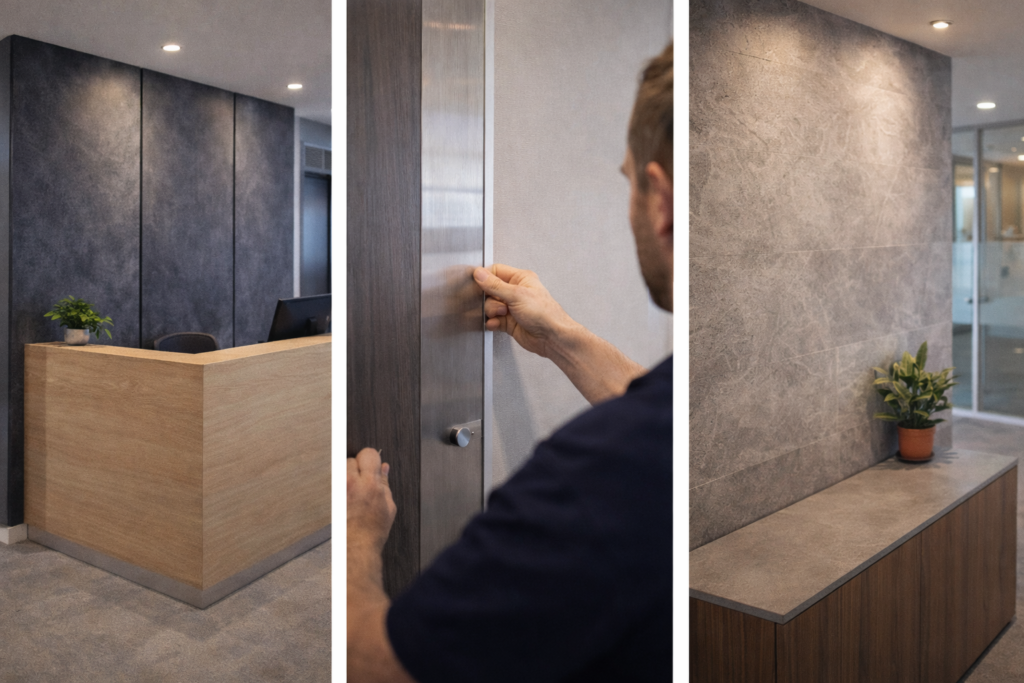
Start with admission desks, shop counters and brochure units. Each substrate must be stable, smooth enough for the selected system and assessed before a quotation is finalised.
Compare physical samples of classic timber, parchment-toned and dark metal effects under the actual lighting, beside neighbouring materials, and on a representative edge or corner where practical.
Often yes. The programme should account for school groups, peak visitor times and protected collections, together with safe access, preparation time and client sign-off.
No. The substrate and coating must be sound and compatible with the selected film. Loose paint, movement, moisture and damaged edges may require repair or make wrapping unsuitable.
Send the site postcode, photographs, approximate dimensions or quantities, the intended finish and your preferred dates. Include access restrictions and any drawings or product references already specified.
For Architectural Wrapping in Canterbury, Smiths 1972 also supports organisations in nearby towns including Whitstable, Herne Bay, Faversham and Ashford. Our team works from Stevenage, Hertfordshire.
Want to discuss your project?